
Tell us about the site
Send the location, approximate area, photos and what you want to achieve.
Professional topdressing for sports turf and green spaces, with the material and work plan chosen around your site.

A considered topdressing plan starts with the existing surface and its soil profile. We discuss suitable materials and spreading requirements to support the finish you need, whether it is a standalone job or part of a larger renovation.
Share your location, area, intended depth and existing soil or sand information. Include photos, delivery access and the timing of related renovation work.
Request a project quote ↗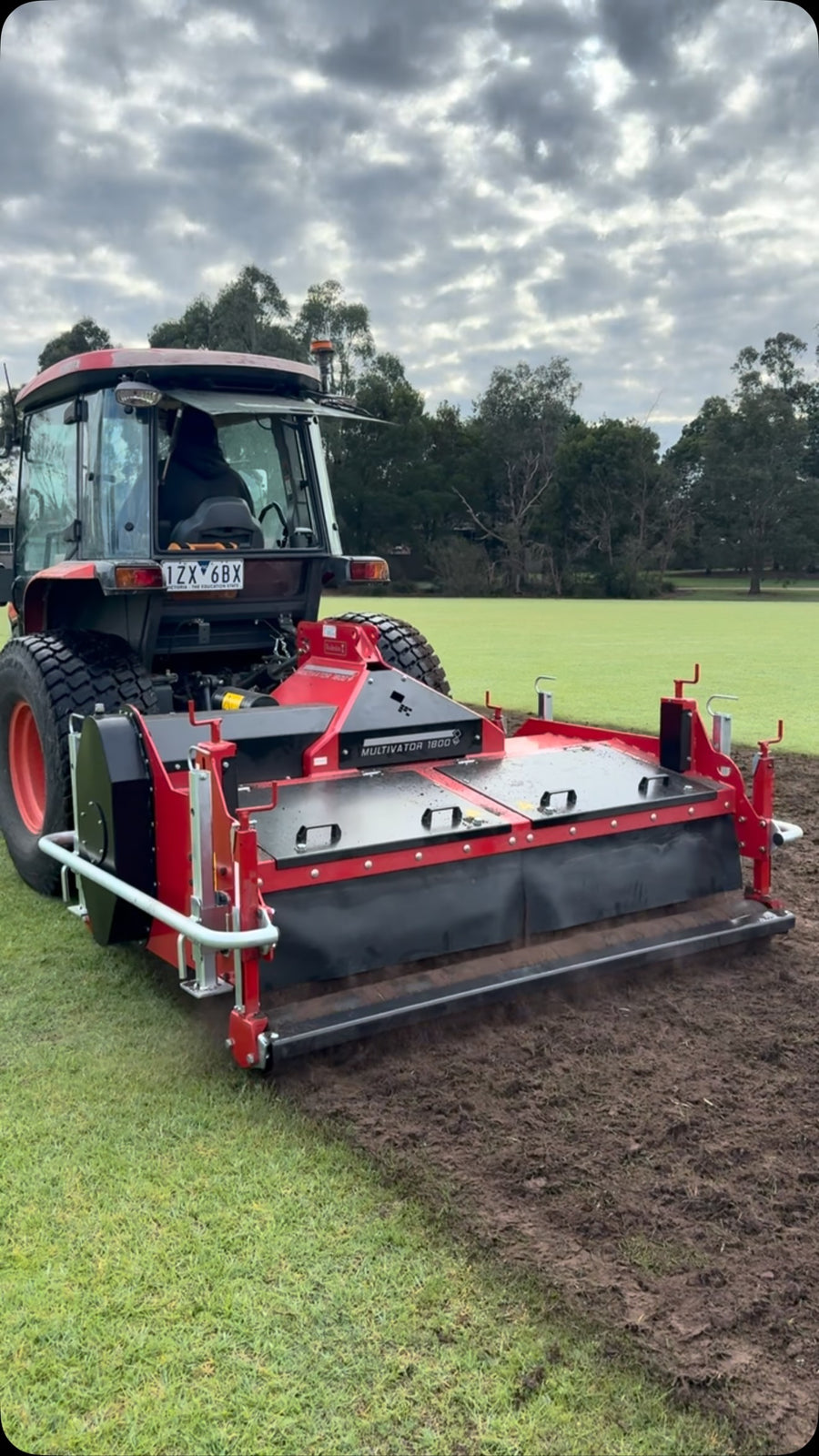
4 October 2026 · @turfmate
Our 4 October 2026 reel shows recycle dressing as a renovation approach. Ask whether it suits your surface and material requirements.
Topdressing applies a thin, even layer of compatible sand or organic material to improve surface levels, support turf recovery and work material into the profile during renovation.
How much do you need? Volume (m³) = area (m²) × depth (mm) ÷ 1,000. A 1,000 m² area at 5 mm needs about 5 m³ before allowances.
Work out your topdressing volume with the Turfmate calculator ↗
Light topdressing is often around 3–5 mm. Heavier applications should be matched to the existing soil profile, turf condition, recovery window and renovation objective rather than applied as a blanket rate.
Use a material that is compatible with the existing profile. Sand-based material is commonly used where surface firmness, levels and drainage characteristics need to be maintained; organic or soil-based materials can suit other lawn and landscape objectives. Avoid creating an incompatible layer above the existing profile.
Plan topdressing when the turf is actively growing and able to recover, often alongside aeration, scarifying or seeding. Avoid heavy applications when turf recovery is poor or the surface is too wet to work cleanly.
Topdressing does not by itself fix persistent drainage or compaction problems. Wet areas may also need investigation, aeration or drainage work.
Topdressing can be coordinated with aeration and coring, scarifying and verti-cutting and seeding and overseeding.

See another renovation approach in our recycle dressing video. The material, application depth and machinery are selected for the site.
Explore the other services available for your surface, or talk to us about bringing the work together.
Send the location, approximate area, photos and what you want to achieve.
Talk through the approach, access, timing, budget and site requirements.
Confirm the quote and coordinate the work around your grounds and their users.
A new project, a surface that needs attention or a planned maintenance program. Share a few details and we’ll discuss the right next step.
Melbourne and Victorian project enquiries welcome. Our Cranbourne South team confirms availability, travel and access.
sales@turfmate.com.auHave photos, plans or tender documents? Email them to sales@turfmate.com.au.
Volume (m³) = area (m²) × depth (mm) ÷ 1,000. For example, 1,000 m² at 5 mm needs 5 m³ before allowances.
The existing soil profile, surface use and renovation goals determine the choice. Share soil or sand test information so we can discuss a compatible material.
Topdressing is one part of surface care. Persistent wet areas may also need soil, compaction or drainage investigation before deciding on the work.
Yes. We can coordinate topdressing with suitable aeration, scarifying or seeding works and agree material delivery, machinery access and the recovery window.